
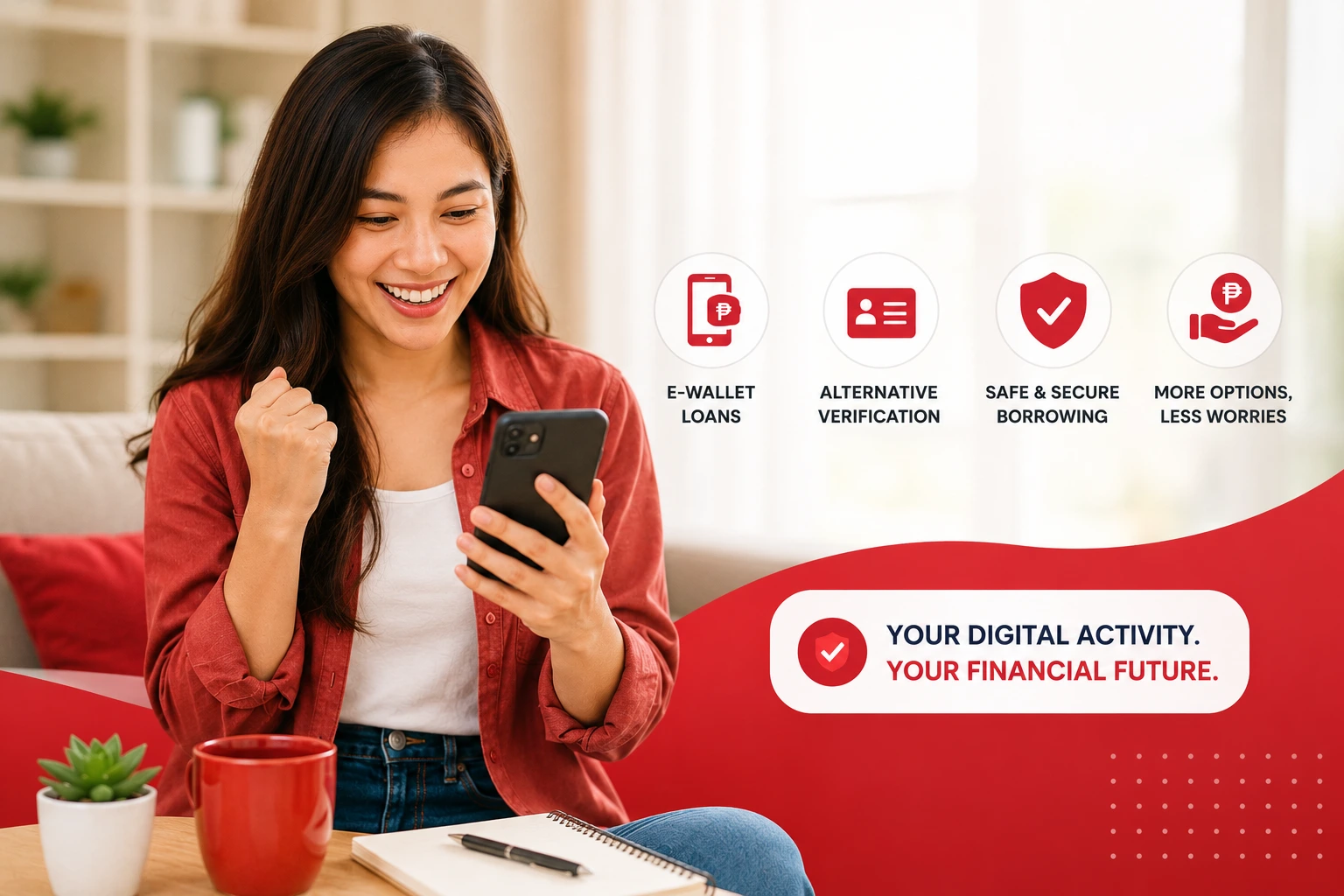
“Kahit walang bank account, pwede ka pa ring umutang.”
For many Filipinos, not having a bank account still feels like a dead end when financial emergencies happen. Whether it’s for medical expenses, school fees, utility bills, or negosyo capital, traditional lenders usually ask for a bank account before approving a loan.
But times are changing.
Today, digital wallets and alternative verification systems are opening doors for millions of unbanked Filipinos. In fact, mobile finance apps have become so widespread that even users in remote provinces can now apply for loans directly from their smartphones. According to reports from Bangko Sentral ng Pilipinas, digital financial adoption continues to rise, especially outside Metro Manila where mobile wallets are often more accessible than physical banks.
This shift matters because many Filipinos still face barriers to traditional banking. Some live far from branches. Others struggle with maintaining minimum balances or proving stable income. Yet despite these challenges, lenders are beginning to recognize something important: your digital activity can tell a financial story too.
That means your GCash transactions, utility payments, remittance history, and even consistent mobile wallet usage can help you qualify for a loan without bank account Philippines borrowers can realistically access.
Here’s how it works — and how you can improve your chances of approval even if you’ve never opened a traditional bank account.
While digital finance is growing fast, many Filipinos remain unbanked for practical reasons.
Traditional savings accounts often require maintaining balances that are difficult for low-income earners. For workers living paycheck to paycheck, even a ₱2,000 maintaining balance can feel risky.
In rural areas, traveling to a bank may require hours of commuting. Mobile wallets became popular partly because they removed the need for physical branches.
Some Filipinos still prefer cash transactions because of concerns about hidden fees, rejected applications, or complicated banking processes.
Freelancers, online sellers, tricycle drivers, and seasonal workers may not have payslips or standard employment documents. This makes traditional loan approval harder.
Below is a quick comparison between traditional banking barriers and newer digital alternatives:
The good news is that lenders are evolving. Instead of focusing only on bank statements, many now evaluate digital financial behavior.
One of the biggest breakthroughs for unbanked Filipinos is the rise of e-wallet loan application systems.
These platforms use your wallet activity as proof of financial behavior.
GCash has become one of the most widely used financial apps in the country. Through services like GLoan and GGives, users may qualify for borrowing even without a traditional bank account.
The platform analyzes your wallet behavior to determine whether you’re eligible.
Maya also offers credit features tied to wallet usage.
Instead of requiring a bank account, Maya evaluates:
The more active and responsible your wallet usage is, the stronger your borrowing profile becomes.
Several licensed lending apps in the Philippines now support borrowers without bank accounts by disbursing funds through e-wallets.
Examples include:
However, always verify if the lender is registered with the Securities and Exchange Commission before applying.
Traditional pawnshops are also evolving into hybrid financial service providers.
For decades, Filipinos relied on pawnshops because they were accessible, familiar, and required little paperwork. Today, many pawnshop companies are integrating digital services.
Examples include:
These institutions now offer:
If you need a bigger loan amount, pawned valuables can still serve as collateral while helping you establish a digital repayment history.
Common collateral items include:
This setup can help borrowers transition from purely cash-based borrowing into digitally recorded financial activity.
Every successful repayment contributes to your broader digital financial identity Philippines lenders increasingly use for evaluation.
In simple terms: your digital footprint is becoming your new credit history.
If you don’t have a bank account, lenders still want proof that you can responsibly manage money.
Here’s what they often review instead.
Consistent activity matters more than large balances.
Lenders look for:
Paying bills on time through your e-wallet can strengthen your financial profile.
Examples:
OFWs and families receiving regular remittances may use these as proof of recurring income.
Digital remittance history can show:
Some lenders accept:
Consistency matters more than income size.
Even small but regular transactions can improve your chances over time.
Unfortunately, not all online lenders are legitimate.
If you’re searching for a GCash loan without bank account, be careful of scams targeting desperate borrowers.
Legitimate lenders usually deduct fees from approved loan proceeds — not before approval.
No responsible lender guarantees approval without evaluation.
Some apps hide excessive charges under:
Always compute the total repayment amount before accepting.
Check if the lender is registered with the:
Avoid apps that pressure you into giving unnecessary phone permissions or personal data access.
Not having a bank account no longer means you’re financially excluded.
Thanks to digital wallets, alternative verification methods, and mobile lending platforms, more Filipinos now have access to borrowing opportunities than ever before. Your e-wallet activity, payment habits, and digital financial behavior can help build credibility even without traditional banking records.
The key is using these tools responsibly while avoiding predatory lenders.
If you’re exploring your options, you can start by checking whether you may pre-qualify through LoanOnline.ph and compare available borrowing solutions that fit your financial situation.


