
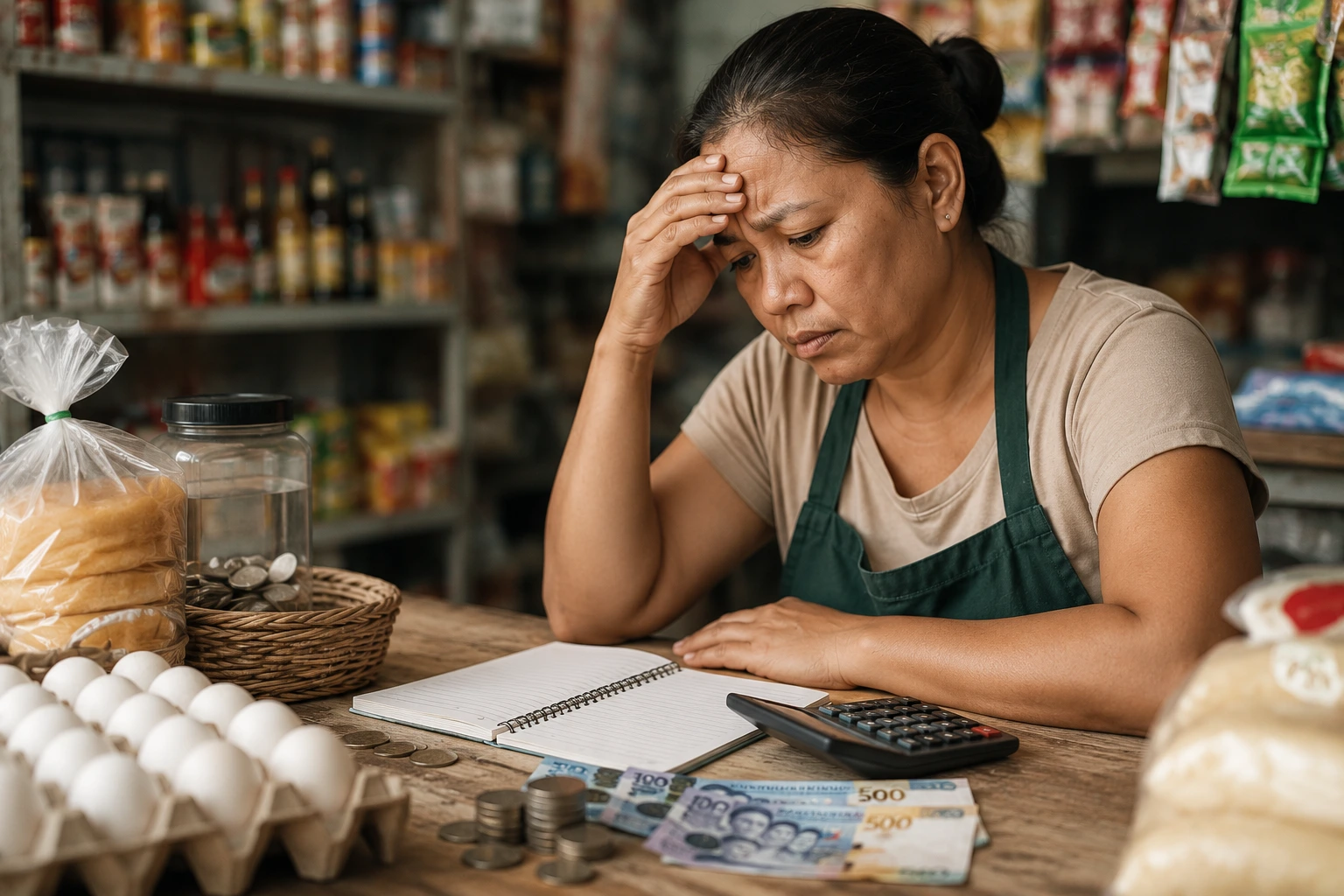
“Bente pesos a day sounds small — but someone is earning 20% from your hard work.”
Across markets, sari-sari stores, and small roadside businesses in the Philippines, “5-6” lending remains one of the most common ways to borrow quick cash. For many tindera and informal workers, it feels like the easiest solution when capital runs low. There are usually no long application forms, no strict credit checks, and no waiting period. You borrow today, and you can restock your negosyo immediately.
The system is simple: borrow five, repay six. If you borrow ₱5,000, you repay ₱6,000 over a short period. On paper, the extra ₱1,000 may not seem too painful. But when you calculate the real cost of repeated borrowing and daily payments, the interest becomes extremely expensive.
So why do many Filipinos still rely on it?
Because the structure matches the reality of daily earners. Many small vendors earn income every day, so daily payments feel easier to manage than large monthly bills. Add the convenience of instant approval and familiar neighborhood lenders, and it becomes understandable why “5-6” continues to thrive.
But convenience comes with a hidden cost. Money that could have gone into savings, business expansion, or household needs often disappears into interest payments.
Understanding the math behind “5-6” lending is the first step toward breaking free from the cycle and finding safer, more affordable loan alternatives.
The biggest problem with “5-6” lending is that the interest looks smaller than it actually is.
Here’s a common example:
That means the lender earns ₱1,000 from a single one-month loan.
At first glance, 20% may not sound shocking. But when you annualize that cost and account for repeated borrowing, the effective interest rate can exceed 300% APR in some situations.
The difference becomes obvious very quickly. With “5-6,” a large portion of your earnings immediately goes to interest. With formal lending options, repayment terms are usually more manageable and transparent.
This is where “5-6” becomes psychologically effective.
Paying:
feels lighter than paying:
But because the payments are small and frequent, borrowers often fail to notice how much money is being drained over time.
Imagine a small vendor earning ₱700 in profit on a decent day:
At the end of the day, little remains.
This is why many borrowers end up taking another loan immediately after finishing the previous one.
For many vendors, the problem is not just one loan. It is continuous borrowing.
A borrower may:
Over time, the interest becomes a permanent deduction from the business income.
Instead of growing the negosyo, the borrower stays trapped in survival mode.
It is easy to criticize “5-6” lending from the outside. But the reality for many borrowers is more complicated.
For thousands of small vendors, it solves immediate financial problems quickly.
Market vendors and sari-sari store owners rarely earn the same amount every day.
Some days are profitable. Others are slow.
Because income is unpredictable, daily repayment systems often feel more flexible than traditional monthly loan structures.
Most banks and formal lenders require:
But many informal workers cannot easily provide these documents.
With “5-6,” being known in the community is often enough.
Many borrowers personally know their lenders.
Sometimes the lender is:
That familiarity creates comfort and trust, even if the interest is high.
Some borrowers also avoid formal lenders because they fear:
For many Filipinos, “5-6” feels simpler and less intimidating.
And it is important to acknowledge this reality with empathy:
You are not making a foolish decision — you are adapting to limited financial access.
But there are now better alternatives available.
Several programs in the Philippines are designed specifically to help small entrepreneurs avoid high-interest informal lending.
The government’s P3 program was created to provide affordable financing for micro-entrepreneurs.
Its goal is simple: reduce dependence on informal lenders charging extremely high interest.
Typical benefits include:
Requirements often include:
The program is usually available through accredited microfinance institutions nationwide.
Members of the Social Security System may qualify for salary loans if they have enough contributions.
Compared to “5-6,” SSS loans typically offer:
Government employees may access lending options through the Government Service Insurance System.
These loans are regulated and generally more affordable than informal lending.
Many local cooperatives provide:
Advantages often include:
Several microfinance groups in the Philippines focus on helping small entrepreneurs.
Examples include:
These organizations offer:
For many borrowers, microfinance becomes a more sustainable long-term solution than repeated “5-6” borrowing.
Digital lending has expanded rapidly in the Philippines, creating more options for informal workers and small business owners.
However, borrowers should still choose carefully because not all lending apps are equally affordable or trustworthy.
Some digital lenders allow:
This gives borrowers more breathing room compared to daily collection systems.
Some platforms now use:
to evaluate borrowers.
This helps informal workers build a financial profile even without traditional documents.
Peer-to-peer lending platforms connect borrowers directly with investors.
Potential advantages include:
Leaving “5-6” lending does not have to happen overnight.
A more realistic approach is:
Over time, this can improve access to better financing options.
Escaping the “5-6” cycle takes planning, but it is possible.
For one month, record:
Many borrowers are surprised by how much money actually goes toward interest.
Once you see the total amount paid in interest, it becomes easier to understand why savings and business growth feel impossible.
It does not need to be perfect immediately.
Possible options include:
If you qualify for a lower-interest loan, use it strategically to eliminate high-cost informal debt first.
Then focus on repaying the more affordable formal loan.
Consistent repayment helps establish credibility.
Over time, this can lead to:
The real danger of “5-6” lending is not just the high interest rate — it is the long-term effect on your ability to grow your income and negosyo.
When a portion of your earnings disappears into daily debt payments, saving money and expanding your business becomes much harder.
“The real financial breakthrough is not avoiding debt entirely, but choosing the right kind of debt.”
If you are looking for more transparent and manageable borrowing options, you can explore micro-loan solutions through LoanOnline.ph to find financing options that better match your needs.


