
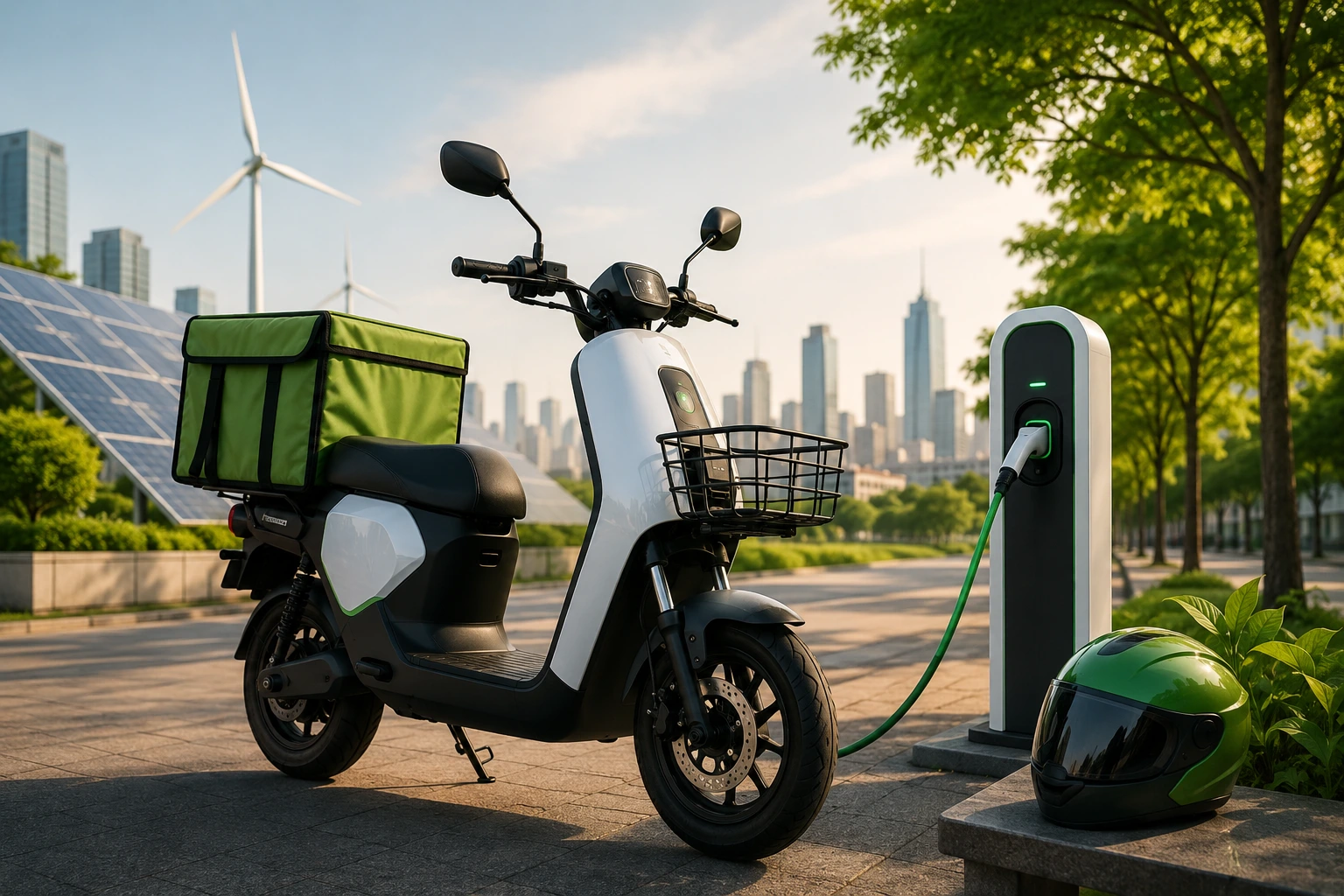
Juan delivers 30 orders a day. His motorcycle drinks ₱300 worth of gas daily—sometimes more when fuel prices spike. That’s nearly ₱9,000 a month just to keep moving. Meanwhile, his neighbor, also a delivery rider, switched to an e-bike. Daily charging? Around ₱50. Monthly cost? Just over ₱1,500.
That’s a difference that doesn’t just affect profit—it changes livelihoods.
Across the Philippines, delivery riders are feeling the pressure of volatile fuel prices. At the same time, the government is pushing for cleaner, more sustainable transport solutions. The Department of Energy (DOE) continues to promote electric vehicles (EVs) as part of its long-term energy transition strategy, encouraging Filipinos to move away from fossil fuel dependence.
But here’s the catch: while the shift to electric makes economic and environmental sense, financing options haven’t fully caught up.
Most traditional motorcycle loans are still designed for gas-powered vehicles. For riders who want to switch to e-bikes or e-motorcycles, the path isn’t always straightforward.
This is where green vehicle financing comes in. Various platforms across the country are helping bridge the gap—making it easier for delivery riders to upgrade to electric without paying everything upfront.
Because the future of delivery isn’t just faster—it’s smarter, cleaner, and more cost-efficient.
Let’s break it down simply:
The numbers speak for themselves. Even at the high end, electric vehicles cost significantly less to operate daily.
For riders earning per delivery, that difference goes straight into take-home income.
Gas-powered motorcycles require:
Electric vehicles, on the other hand:
The biggest cost for e-bikes is battery replacement—but this typically happens after 2–4 years, depending on usage.
Electric vehicles in the Philippines fall under specific classifications:
Key rules include:
Understanding these classifications helps riders choose the right vehicle—and ensures compliance with regulations.
Despite growing demand, many banks and lenders still prioritize gas-powered motorcycles.
Why?
This creates a gap for riders who want to switch but can’t pay upfront.
The government is stepping in to encourage adoption.
Recent initiatives include:
At the community level, some barangays are exploring shared charging stations to support delivery riders and commuters.
There have also been recent developments involving GSIS-backed financing programs for government employees looking to purchase e-bikes. These programs aim to make electric mobility more accessible through low-interest loans and salary-deduction schemes.
While currently limited to GSIS members, it signals a broader trend: institutional support for green transport is growing—and private lenders are expected to follow.
Here’s a practical comparison:
Even with loan payments, e-bikes can cut monthly costs nearly in half.
Most riders reach break-even within 8 to 12 months, depending on:
After that, the savings become even more significant.
LoanOnline works with accredited e-bike dealers, making it easier to:
Applicants can:
The process is designed for speed—because riders can’t afford downtime.
Once approved:
The Philippine government is targeting a significant increase in EV adoption by 2040, aiming to reduce carbon emissions and fuel dependence.
For delivery riders, this means one thing: electric is not a trend—it’s the future.
Switching early comes with benefits:
In a competitive gig economy, even small advantages matter.
Switching to an e-bike isn’t just about going green—it’s about earning smarter.
Lower daily costs, reduced maintenance, and long-term savings make electric vehicles a practical upgrade for delivery riders navigating rising fuel prices. And as financing options evolve, making the shift no longer requires a large upfront investment.
Some platforms like LoanOnline are now starting to support this transition by offering loan options that can be tailored specifically for electric vehicles—helping riders align their repayments with the savings they generate on the road.
If you’ve been considering the switch, now might be the right time to explore your options.
Lower daily costs can start with your first green delivery.


